
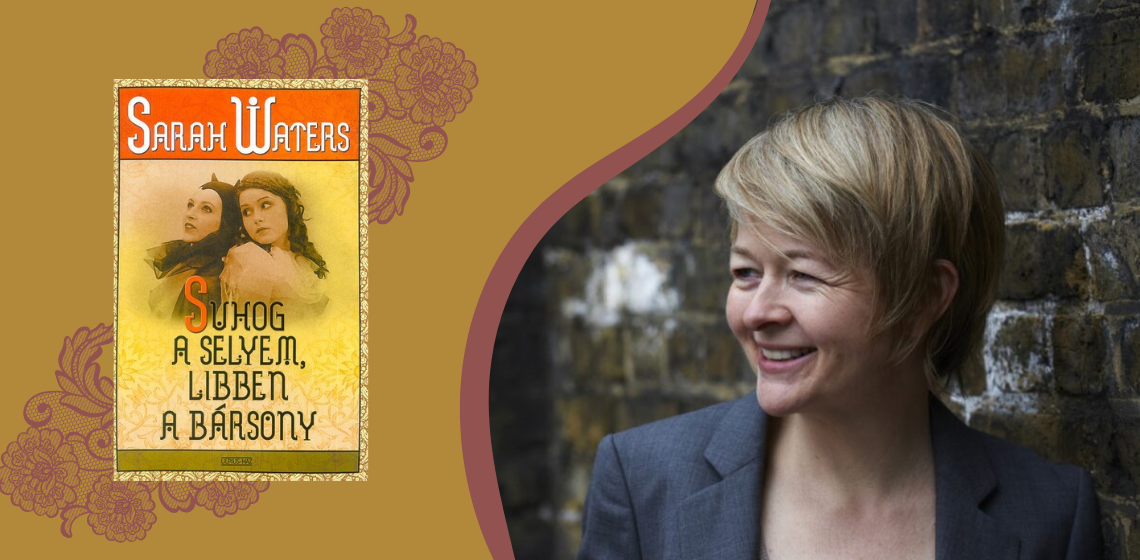
Sarah Waters once said in an interview that her first novel, Tipping the Velvet, was dearest to her heart. The Hungarian title, “Suhog a selyem, libben a bársony” (“Silk rustles, velvet flutters”), is more sensual and delicate, not as raw and explicit as the English title, which is Victorian-era slang referring to female oral sex. Sarah Waters tried to translate this language into her narrative, thereby creating an exciting, distinctive queer world.
The story’s narrator is Nancy Astley, who lives in the small seaside town of Whitstable with her family. Life in Whitstable is simple. Nancy works from dawn till late at night in the Astley Oyster House—Kent’s finest—run by her parents. She is the oyster girl, which means that she sits on a backless chair all day, opening, washing, and scooping oysters. Her life is simple, unfolding quietly and rather boringly, even though she has a sort-of suitor; this fact doesn’t enliven her daily routine. She has only one great passion: the variety shows.
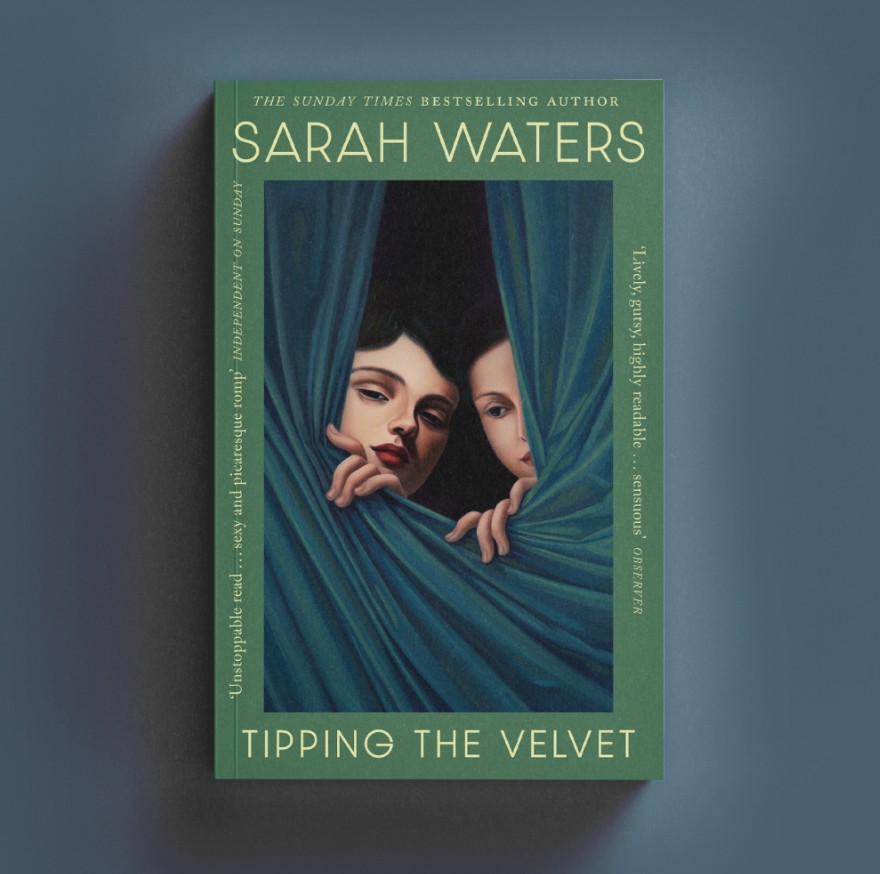
Nancy’s life starts to turn upside down when she and her sister visit the Canterbury Palace, where new acts are being presented. Nancy is completely captivated by Miss Kitty Butler, who has transferred from the Donever Phoenix Theatre. The actress appears on stage in elegant, fashionable men’s clothing. Kitty sings songs and, at the end of her performance, throws a rose into the lap of the prettiest girl. Just watching the fifteen-minute act is enough for Nancy to fall completely in love with Kitty, so much so that she goes to her performance almost every day. Her family just laughs at this so-called childish enthusiasm, but this infatuation changes Nancy’s whole life.
She slowly befriends the object of her adoration, who offers her a job as her dresser. Nan readily accepts the job and goes with Kitty to London. In the bustling metropolis, she soon dresses in men’s clothing herself and appears on stage with Kitty, while backstage they conduct a secret love affair.
In the vibrant capital, Nancy discovers new, liberating experiences. Secret gay societies and bars, lavish salons, and filthy alleys provide settings for their escapades. Although the characters live in a real historical era, the queer background is freer than what the age would allow. We follow Nancy’s coming-of-age story, with eroticism always present. The sex scenes never become gratuitous pornography, but remain within the bounds of good taste. It is a truly electrifying, romantic-erotic novel set at the end of the 1800s, during an exciting era when the suffragette movement is flourishing.
Translated by Emese Balog