Alert: new article series on qLit! In this new article series, our goal is to feature lesbian* organizations and their teams around Europe. We hope that by doing this, we can build bridges and connect efforts, as well as celebrate those who champion our community. As our debut, we have invited Antonija from neighboring Croatia, representing her organization LORI. Happy reading!
Hello, Antonija! Please introduce yourself briefly to the qLit community.
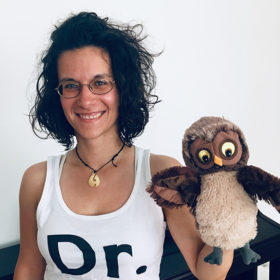
My name is Antonija Stojanović. I have been active in LORI since 2012. I serve as Programme Coordinator for two programmes: one focused on combatting discrimination and promoting the rights of LGBTI persons and women – through monitoring the situation of women’s and LGBTI rights, advocacy efforts, and educational activities – and another centered on Queer and Feminist Culture, which offers space for creative expression.
What inspired you to work or volunteer for LORI?
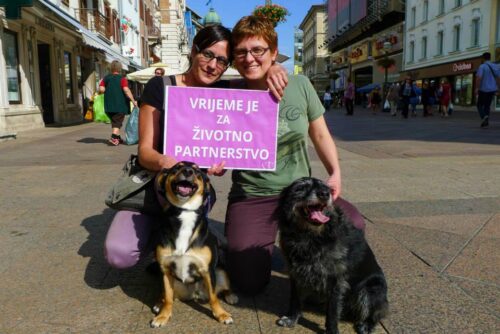
The moment I stepped into LORI in 2012, I instantly fell in love with the warmth and solidarity that live here – the deep care this small but fierce team has for the community and the unwavering dedication to building a truly welcoming, safe space for queer people. I dove into volunteering right away, starting with community empowerment, education for students, and youth work. Over time, my work expanded into new areas as well, because LORI consistently gives me the support to grow, explore, and gain new knowledge.
Sounds inspiring! Can you tell us a bit about the history of LORI?
LORI was founded in 2000 as the first registered lesbian organisation in Croatia. Our founding sisters deliberately chose the word “lesbian” as a political statement, even though they intended from the start to support queer people more broadly. At the time, the term “lesbian” was often associated with pornography or sensationalist tabloid stories, so they aimed to reclaim it in a positive way and raise public awareness to foster acceptance.
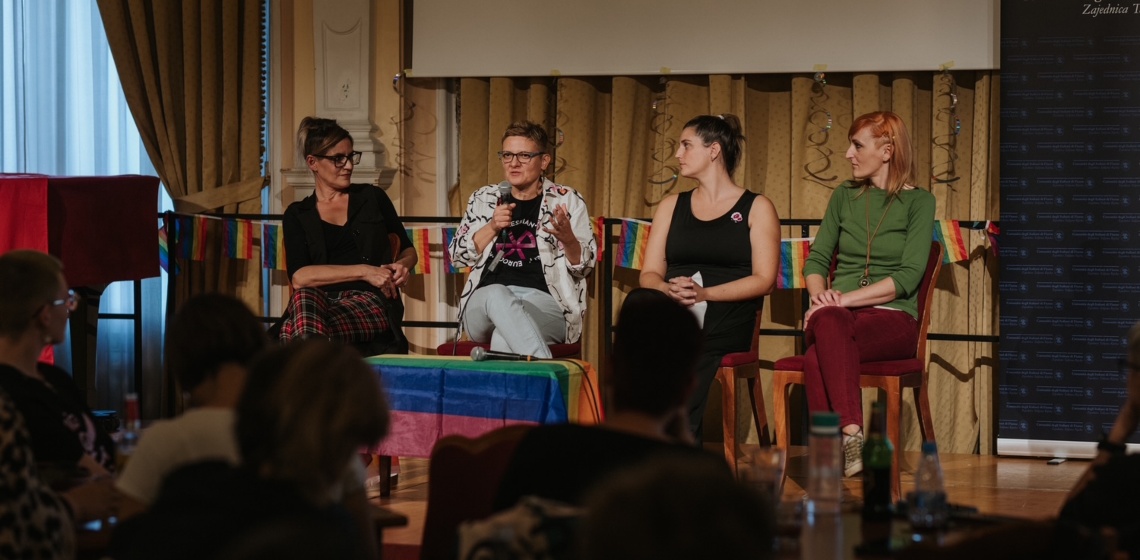
Since its beginnings, LORI has worked in two parallel areas: empowering LGBTIQ+ persons – through free psychosocial support, legal assistance, and more; and raising public awareness and acceptance, which includes campaigns, public actions, and training for various professionals.
Tell us a bit about the team.
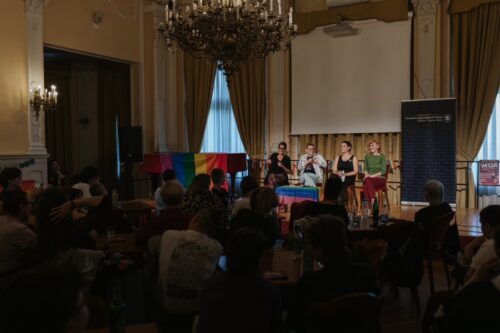
We’re a small but busy team of four staff members fully employed, strengthened by a wider network of our dear long-term volunteers and friends. We have therapists who counsel, legal experts who provide free legal aid, and others who nurture youth work and community events. Our motivation comes from the values we share: acceptance, solidarity, togetherness, and the belief in a society with equal opportunities for everyone.
As a crucial question for NGOs like you or us, let us ask a bit about the sustainability of LORI. How do you keep the organization alive?
We are mostly project-funded, and depend on EU public calls, as we have little access to institutional or broader support. In Croatia there is a strong institutional homophobia, hence we have practically no public calls or financing opportunities from the government, ministries or local municipalities. Furthermore, even for the existing EU programs, implementing agencies (governmental bodies) tend to administratively over-burden civil society organisations so much that there is a term for that: administrative violence. In that sense, keeping the organisation alive is a constant struggle, as well as to ensure funds for free services for LGBTIQ+ persons.
What message would you send to members of the Hungarian lesbian* community?
To the Hungarian lesbian* community, I would like to say: you are not alone, and your visibility, strength, and resilience matter! They are inspiration to so many other lesbians* across the world – you perhaps will never know whose lives you have positively influenced with your work. Your identities and experiences are valid, and your voices deserve to be heard. Please, keep supporting one another, keep creating communities of care, and keep standing proudly in who you are. We stand with you in solidarity!