
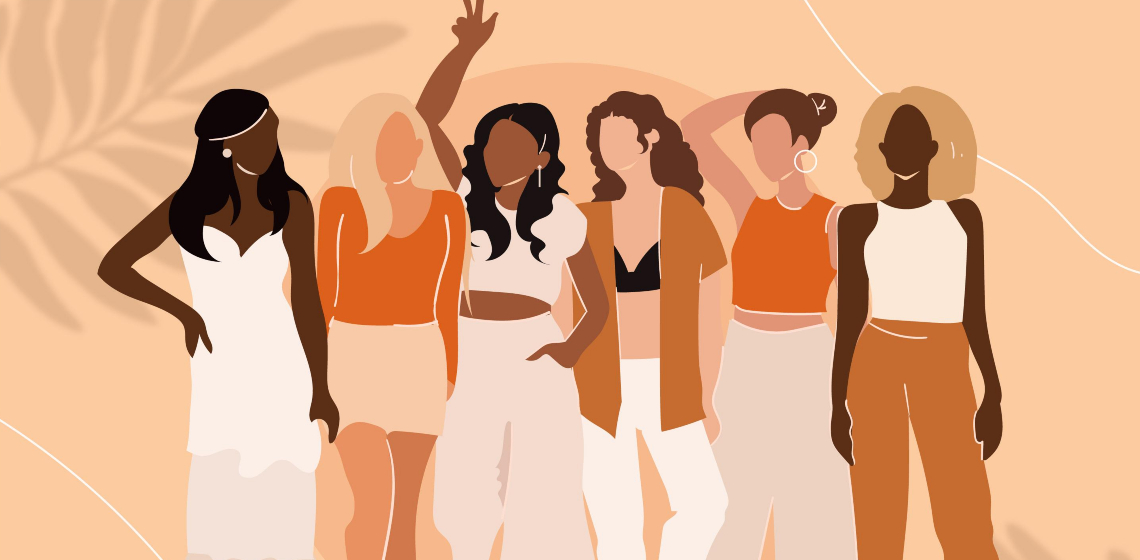
On International Women’s Day, as lesbians, what else can we say but “Happy Women’s Day to everyone who lives as a woman!” But what are we actually celebrating on the 8th of March, why on this day, and why flowers, of all things? In fact, it might also be worth asking: who is this day for? All women, or only those who conform to some expectation of “femininity”? What about those who don’t want to be squeezed into roles wrapped in pink? The 8th of March is also a good opportunity to ask these questions.
Origins
International Women’s Day has its roots in the labour movements of the late 19th and early 20th centuries, during which women fought for equal rights, suffrage, and better working conditions, among other causes. It has been a long journey to reach the point where you can vote, have your own income, your own opinions, pursue a career, make your own decisions, and get an education as a woman.
One of the most frequently cited precursors is the 1908 demonstration by female textile workers in New York, where women demanded shorter working hours, better wages, and the right to vote. At the turn of the 19th and 20th centuries, the women’s movement grew increasingly strong in both Europe and the United States, demanding not only labour rights but also political rights.
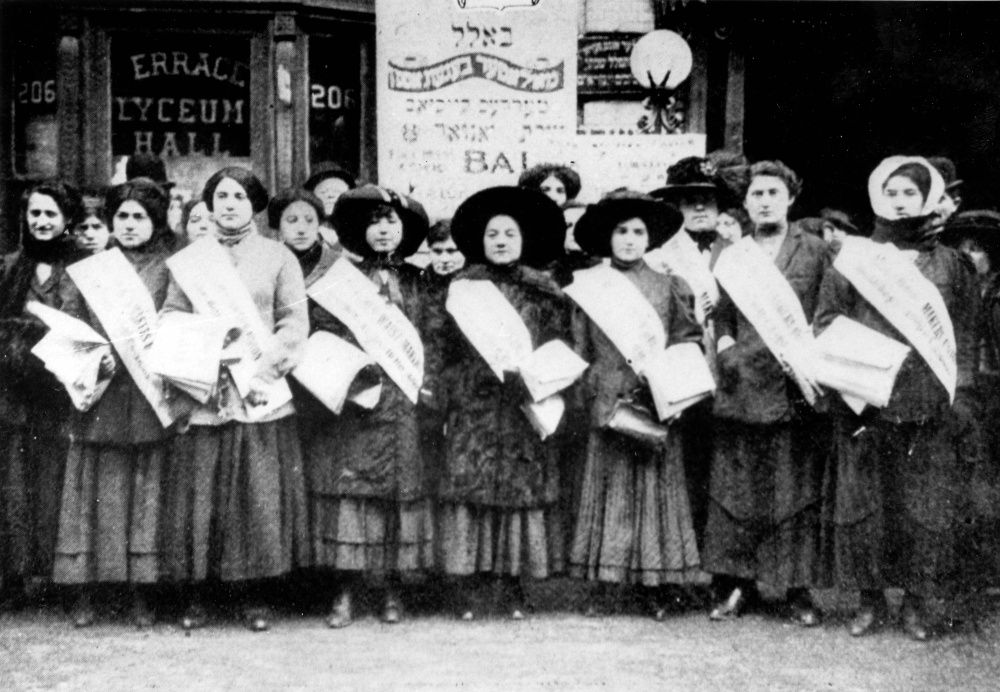
In 1910, the idea of an International Women’s Day was formally proposed at the International Socialist Women’s Conference in Copenhagen, with the aim of drawing attention to the struggle for women’s suffrage and equal rights. In 1917, a strike by female workers began in Russia on the 8th of March, which ultimately led to the collapse of the tsarist regime and the introduction of women’s suffrage. The date became symbolic from that point on.
Women’s Day events were already being held in Hungary as early as 1914, and over the course of the 20th century, the meaning of the day changed several times: it was a political struggle, a state-sponsored socialist celebration, and eventually became an occasion to give out flowers. Its history, therefore, is not a straight line, but a series of changes spanning different eras.
Although it seems only natural today that we can study, work, and vote, these rights only became self-explanatory in legal and social terms relatively recently—in Europe, for example, Portugal (1976) and Liechtenstein (1984) were the last countries to grant women full suffrage. Today, this right formally exists in most countries, yet actual political equality is still far from a given in many places.
Why flowers?
Is your smile also forced when you have to accept flowers from colleagues, complete with smacking kisses? The phenomenon behind this is called benevolent sexism. As the name suggests, it’s a gesture that’s fundamentally meant to be nice—after all, we receive the chocolates, flowers, and the like because they’re a way of thanking women for being “sweet, delicate flowers.”
The flowers themselves are fine. The tulips are beautiful, the chocolate is delicious, and the attention feels nice. The question is rather this: if Women’s Day is reduced to just that, aren’t we losing sight of the reason it was created in the first place?
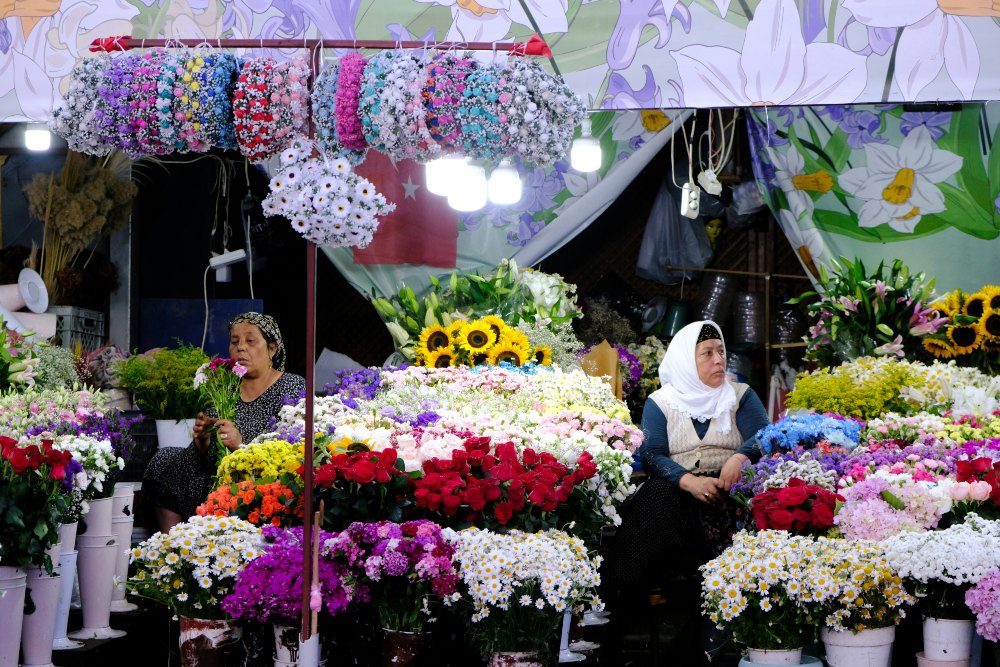
If you’d be happier with, say, a gift card to a home improvement store, believe me, I understand—even though I myself am crazy about plants. However, I would be far more excited by the end of violence against women, the narrowing of the wage gap, the equitable distribution of invisible labour, or more women in decision-making positions. These may be less flashy than a bouquet of flowers, but in the long run, they would be much more lasting gifts.
What do/should we celebrate?
Like any international day or holiday, International Women’s Day truly comes to life through how we each relate to it: for some, it is important to be acknowledged and recognized as female members of society; others see it as a pointless exchange of flowers; still others seize the opportunity to draw attention to issues affecting women. For lesbian, bisexual, trans, or queer women, this day is particularly complex, as we must face not only gender-based inequalities but also other forms of discrimination.
If you don’t want to, you don’t necessarily have to identify with any of these; you can make this day about joy, about making your voice heard, or to reflect on your relationship with femininity. At the same time, the 8th of March can also be a day of solidarity: supporting other women, and highlighting the work of women entrepreneurs, creators, athletes, scientists, and activists. You don’t have to start a revolution, but you also don’t have to settle for clichés.
We can celebrate our successes, remember the struggles, be happy about the home improvement store gift card, and accept the tulip. Or we can simply give it back. But the 8th of March truly comes alive when it is not just a kind gesture, but a conscious reminder: we have the right to be here, to make decisions, to speak up, to love, and to live—as women, just as we are.
Translation by Zsófia Ziaja
